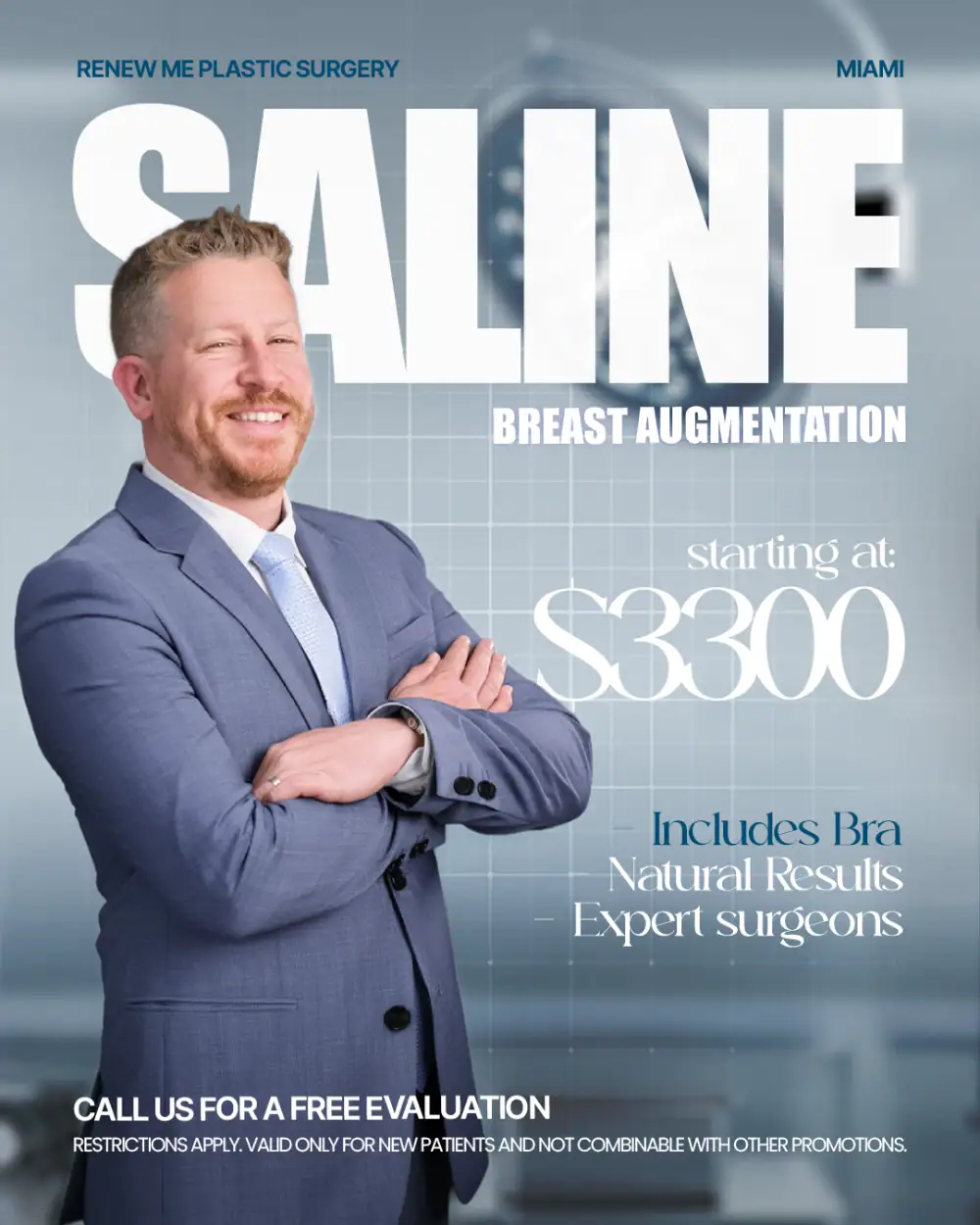
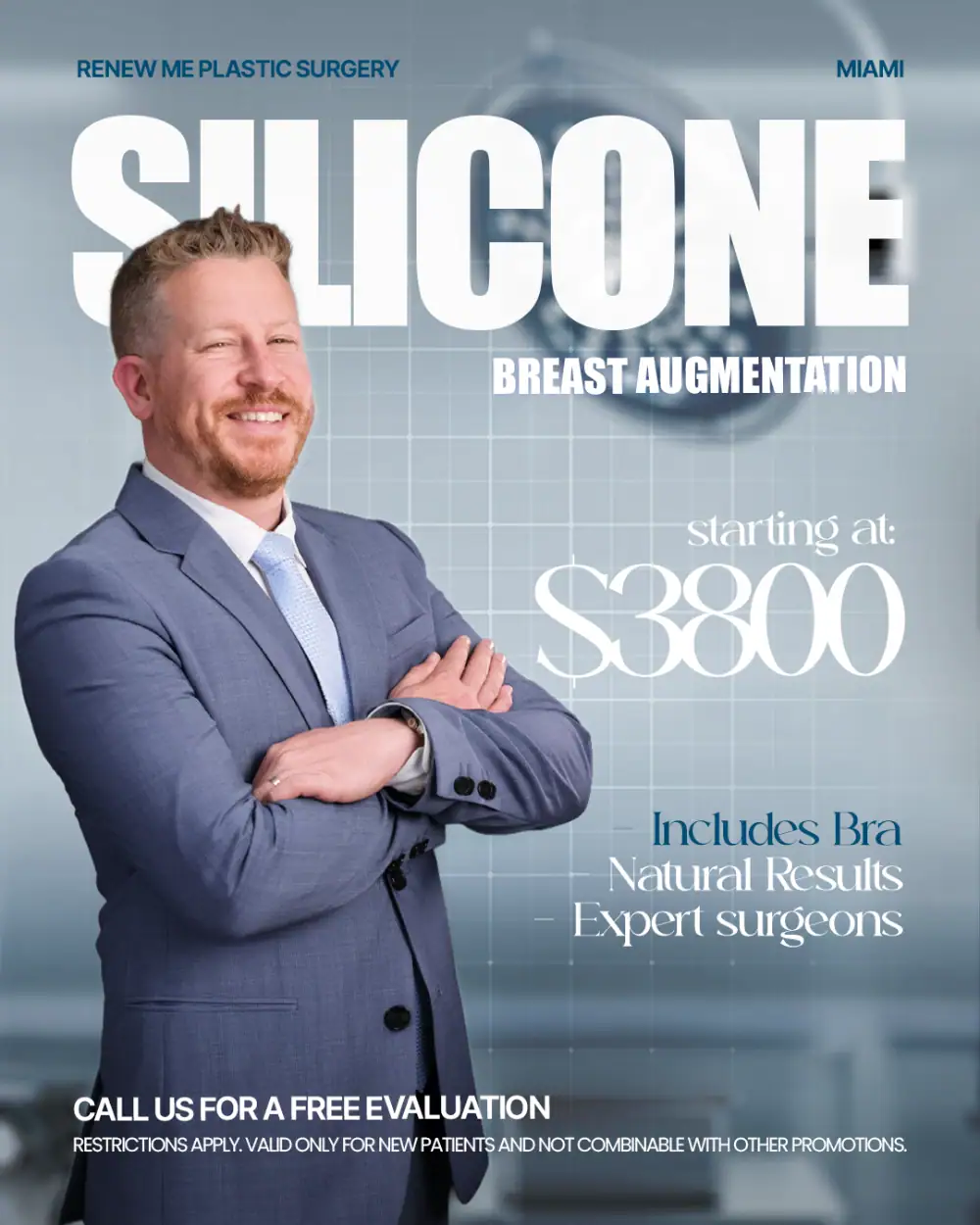
Silicone implants feel more like natural breast tissue and hold their shape if they rupture – but a silicone rupture is often "silent," so the FDA recommends ultrasound or MRI screening starting five to six years after surgery. Saline implants go in through a smaller incision and deflate visibly if they rupture, though they can feel firmer and ripple more in thin patients. Both are FDA-approved: silicone for ages 22 and up, saline for 18 and up.
What is the actual difference between them?
Here's the part that surprises most people: both types have a silicone outer shell. The difference is what's inside. Saline holds sterile salt water. Silicone comes pre-filled with a cohesive gel – the "gummy bear" gel, named for the way it holds its shape.
That one difference drives almost everything else. Saline implants go in empty – the surgeon fills them during surgery, so the incision stays small. Silicone implants arrive pre-filled, so they need a slightly longer incision.
Which one feels more natural?
Silicone, by most accounts. The gel's thickness is close to natural breast tissue, which is why many women prefer it. Saline can feel firmer to the touch.
Saline also ripples more – faint wrinkles showing through the skin – especially in thinner patients with less natural tissue over the implant. For very thin patients, surgeons often lean toward silicone.
What happens if an implant ruptures?
If a saline implant ruptures, it usually deflates fast – you'll see the change in the mirror within days. The salt water gets harmlessly absorbed by the body. No imaging needed. The rupture announces itself.
If a silicone implant ruptures, you may notice nothing – the gel tends to stay put, so the breast keeps its shape. The FDA calls this a "silent rupture" – and it's why silicone implants come with screening recommendations (more below).
In the biggest published dataset – Coroneos and colleagues' 2019 analysis of nearly 100,000 patients in FDA post-approval studies, published in Annals of Surgery – short-term rupture rates were 2.5% for saline versus 0.5% for silicone.
Do silicone implants need special checkups?
Yes. The FDA's guidance is specific – worth quoting word for word:
"Even if you have no symptoms, you should have your first ultrasound or MRI at 5-6 years after your initial implant surgery and then every 2-3 years thereafter. If you have symptoms at any time or uncertain ultrasound results for breast implant rupture, an MRI is recommended."
Saline implants need no such screening, because – as the FDA puts it – "rupture is detectable without screening." You'll see it.
How long do breast implants last?
Breast implants aren't lifetime devices. The FDA's patient labeling says so directly, and the chance of complications climbs the longer implants stay in.
In that same large FDA dataset, about 11.7% of primary augmentation patients had a reoperation within seven years – for everything from size changes to complications. That doesn't mean implants "expire" at seven years; plenty of women keep theirs much longer without trouble. But going in, plan like a future procedure is possible, not unthinkable.
What is capsular contracture?
Whenever an implant goes in, the body naturally forms a thin scar-tissue capsule around it. Usually that capsule stays soft and you never notice it. Sometimes it tightens and hardens, squeezing the implant – that's capsular contracture. It can change the breast's shape and cause discomfort, and bad cases need surgical correction.
In that same Coroneos analysis, short-term capsular contracture ran 5.0% for silicone versus 2.8% for saline. Those rates shift with surgical technique, implant placement, and follow-up length – so take any single number as one data point, not a promise.
What is BIA-ALCL?
BIA-ALCL is a rare immune-system cancer that can develop in the scar tissue around a breast implant. The FDA considers an individual's risk low, but the condition is serious. It's been linked especially to textured-surface implants – in 2019, the FDA asked Allergan to voluntarily pull its BIOCELL textured implants and tissue expanders. Ask your surgeon directly: which implant surface do they use, and why.
Who is a good candidate for each type?
Start with the FDA's age rules: 18 or older for saline, 22 or older for silicone (for cosmetic augmentation; silicone has no age minimum for reconstruction).
Beyond that, body type and priorities steer the choice:
Thinner patients with less natural breast tissue often suit silicone – more natural feel, less rippling.
Patients who want the smallest possible incision may prefer saline.
Anyone who wants to spot a rupture themselves, with no imaging schedule, may prefer saline.
Renew Me's candidacy criteria are straightforward: good overall health, realistic expectations, non-smoker (or willing to quit), and no active breast infections or untreated breast cancer.
What shapes your quote?
No two quotes look alike, because no two surgeries are the same. What moves the total most: the implant type you choose, the surgical technique, anesthesia, and the facility itself. A proper quote breaks everything down line by line – the surgeon, anesthesia, the surgical facility, the implants, your post-op garments, and follow-up visits – so you can see exactly what you're paying for instead of guessing.
Renew Me offers flexible financing and payment plans, and the consultation itself is free. The smart move is to show up with questions: what's included in the quote, what happens if a revision is ever needed, and how your implant choice changes the surgical plan. That's how you compare clinics on something real instead of a headline number.
Which implant should you choose?
There's no universal winner. Silicone feels more natural but asks for a longer incision and a screening schedule. Saline means smaller scars and obvious rupture detection but can feel firmer and ripple. The right choice comes down to your anatomy, your age, how you feel about follow-up imaging, and what matters most to you.
That's a conversation to have with a surgeon who can examine you – not a call to make from articles alone.
Book a consultation in Miami
At Renew Me Plastic Surgery in Miami, Dr. Paul Boulos – a board-certified cosmetic surgeon with over 1,500 procedures performed – will walk you through both implant types, show you how each would look on your frame, and give you an exact, transparent quote. Call (786) 957-1777 or visit 730 NW 107th Ave, Suite #117, Miami, FL 33172 to book your free consultation.
Sources
FDA – Breast Implants hub (labeling guidance, screening schedule, rupture behavior, boxed warning, Allergan BIOCELL recall, BIA-ALCL) https://www.fda.gov/medical-devices/implants-and-prosthetics/breast-implants
Ohio State Wexner Medical Center – Breast Augmentation (implant types, feel, incisions, age rules) https://wexnermedical.osu.edu/plastic-surgery/cosmetic-surgery/surgical/breast-augmentation
Coroneos et al., Annals of Surgery (2019) – 99,993-patient FDA post-approval data: rupture, capsular contracture, and 11.7% reoperation rates (via HealthDay) https://medicalxpress.com/news/2018-09-long-term-outcomes-breast-implants-explored.html
Renew Me Plastic Surgery – Breast Augmentation Miami (clinic's own page; implant types, incisions, candidacy, financing, contact) https://www.renewmeplasticsurgery.com/breast-augmentation-miami/
Renew Me Plastic Surgery – Homepage (Dr. Paul Boulos credentials) https://renewmeplasticsurgery.com/
Explore Related Resources at Renew Me Plastic Surgery
breast augmentation | breast lift | financing options
Learn more about tummy tuck in Miami or contact our team to discuss your goals.