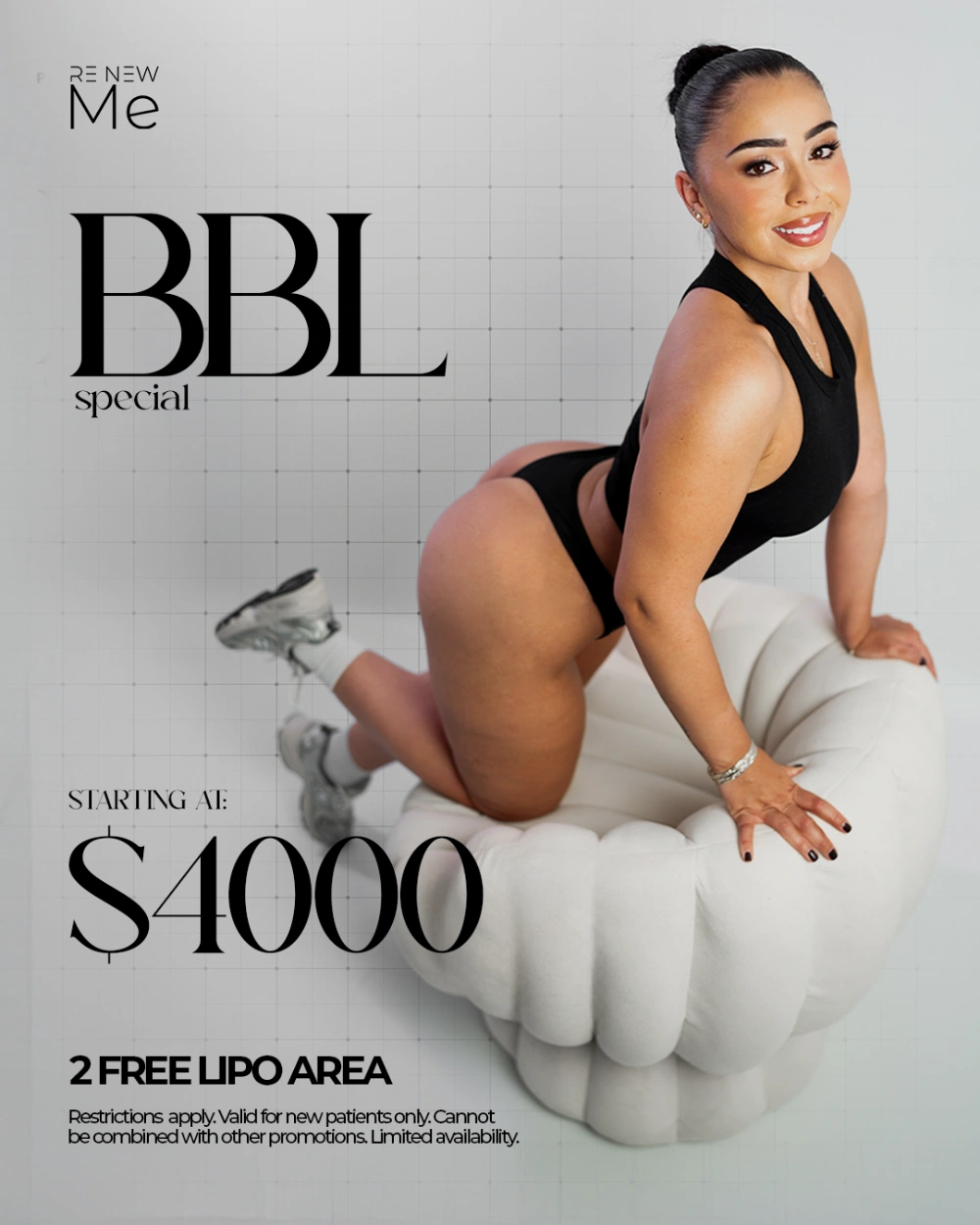
After a Brazilian Butt Lift (BBL), you’ll need to stay off your buttocks for longer than most people expect. The standard recommendation is two to four weeks of avoiding direct pressure, with many surgeons pushing that to six weeks before you sit normally again.
Here’s why it matters. When fat is transferred during a BBL, those cells need to develop a blood supply in their new location. That process takes weeks. Sitting puts direct pressure on the area and restricts circulation, which can cause fat cells to die before they’ve had a chance to integrate. Once those cells are lost, they don’t come back.
Your surgeon will give you a specific timeline. Stick to it, even if you feel fine earlier than expected. If you’re still in the planning stage and want guidance tailored to your body and goals, the team at RenewMe Plastic Surgery in Miami can walk you through what recovery looks like before you commit. Call (786) 957-1777 or fill out the online contact form to schedule a consultation.
Why sitting is such a problem after a BBL
Most people understand they need to rest after surgery. What’s less obvious is why sitting, something you do dozens of times a day without thinking, becomes one of the main risks to your results.
During a BBL, fat is removed from one part of your body through liposuction, then injected into the buttocks in small amounts across multiple layers. Those fat cells arrive without an established blood supply. For the first several weeks, they’re essentially waiting for nearby blood vessels to grow toward them and connect. That process is called neovascularization, and it’s fragile.
Sitting compresses the tissue. That compression restricts blood flow. Without adequate blood flow, fat cells don’t survive. And unlike the swelling that resolves on its own, lost fat volume is permanent.
Pressure also affects the nerves in the area. The buttocks have significant nerve density, and sustained compression can prolong numbness, tingling, and discomfort well beyond the normal recovery window.
The two- to six-week restriction isn’t arbitrary. It maps to the period when those fat cells are most vulnerable, before neovascularization has had enough time to establish a reliable blood supply.
What to expect each week
Recovery happens in stages. Here’s a general breakdown:
- Weeks one and two: No sitting on your buttocks. Sleep on your stomach or side. This is the most critical window for fat graft survival.
- Weeks two through four: You can begin sitting in short sessions, but only with a BBL pillow, a cushion designed to shift your weight onto your thighs and away from your buttocks. Without it, you’re undoing the purpose of the surgery.
- Weeks four through six: Gradually increase how long you sit, still using the pillow. If you notice increased swelling or pain, back off.
- Weeks six through eight: Fat grafts are generally stable by now. Many surgeons begin allowing a return to normal sitting, though they’ll confirm this at a follow-up visit.
Don’t stop using your pillow until your surgeon clears you, not when it feels OK to you.
How to sit without damaging your results
When you do sit, keep sessions to 20 or 30 minutes at most. Then stand up, move around for a few minutes, and sit again if you need to.
A BBL pillow, sometimes called a pressure-redistribution cushion, is not optional during this phase. It works by elevating your thighs slightly and creating a gap under your buttocks so your weight is carried by your legs, not the grafted area. Using a regular cushion or folded blanket isn’t the same. The geometry matters.
Position the pillow so your thighs carry your weight. Your buttocks should not be making firm contact with any surface. If you’re not sure you’re using it correctly, ask your care team at your follow-up.
For work situations, set a timer. Thirty minutes sitting, a few minutes standing. If your job requires extended sitting, such as desk work, driving, or long meetings, talk to your surgeon before returning. Some people need modified duty or temporary remote arrangements in the first few weeks.
Toilet visits are unavoidable. Keep them brief. A raised toilet seat or bedside commode can help reduce contact time, especially in the first two weeks when pressure restrictions are strictest.
Sleeping position during recovery
Most people don’t think about sleep as a sitting issue, but the rules are similar. Sleeping on your back puts sustained pressure on your buttocks for hours at a time, which is exactly what you’re trying to avoid.
For the first four to eight weeks, sleep on your stomach or side. If stomach sleeping is uncomfortable, a body pillow along your front can help you stay on your side without rolling onto your back overnight.
Some people find this part of recovery genuinely difficult, especially if they’ve always been back sleepers. It gets easier after the first week or two as your body adjusts. If you’re waking up on your back, try placing a pillow or rolled towel behind you to make rolling over less likely.
What you should avoid during recovery
Several things can interfere with healing beyond sitting too early:
- Tight clothing restricts blood flow to the area and can compress the graft. Wear loose, comfortable clothes. Your surgeon may also recommend a specific compression garment. Follow their guidance on when to wear it and for how long, since this is different from general tightness.
- Alcohol slows healing and reduces blood flow. Skip it during recovery.
- High-impact activity such as running, heavy lifting, or intense cardio puts stress on the area before it’s ready. Most surgeons restrict this for four to eight weeks.
- Hot baths, saunas, and hot tubs can increase swelling and raise infection risk. Stick to showers until your surgeon clears you.
- Smoking significantly impairs circulation and reduces the oxygen supply tissues need to heal. If you smoke, talk to your surgeon well before your procedure. Most require stopping several weeks before and after surgery.
Even with a pillow, try to stand or walk briefly every 30 to 60 minutes while sitting.
What’s normal and what’s not
Some discomfort, swelling, and bruising in the first few weeks is expected. Your buttocks may feel firm or uneven early on. That’s normal as swelling resolves and the fat settles. Final results often aren’t visible until three to six months post-op, once swelling has fully gone down.
It’s also normal to notice that your results look smaller in the first few weeks than you expected. Some fat absorption happens with every BBL. Most surgeons account for this when determining how much fat to transfer.
Call your surgeon if you notice any of these:
- Pain that gets worse after the first week instead of better.
- Redness, warmth, or hardening in one specific area.
- Drainage or discharge from incision sites.
- Fever above 101°F.
- Sudden or significant asymmetry.
These can be signs of infection, fat necrosis, or other complications that need prompt attention. Don’t wait to see if they resolve on their own.
How to plan your life around recovery
The sitting restrictions affect more than just your couch time. Thinking through practical logistics before surgery makes the first few weeks significantly easier.
Driving is off the table for at least two to three weeks, both because of sitting pressure and because pain medication affects your reaction time. Arrange transportation in advance for follow-up appointments and any essential errands.
Work depends on what you do. Remote desk workers can often return in two to three weeks using a pillow. People in physical jobs, or jobs that require long periods of sitting without breaks, may need three to six weeks off. Talk to your surgeon before your procedure so you can plan accordingly.
Travel by car or plane during the first six weeks is strongly discouraged. Sustained sitting in a confined space, especially on a long flight, is exactly the kind of pressure that compromises grafts. If travel is unavoidable, discuss it with your surgeon first.
Having help at home for the first one to two weeks is genuinely useful. Simple tasks like cooking, laundry, and childcare are harder when you’re limited in how you can move. Plan for it rather than assuming you’ll manage.
The bottom line
Six weeks feels like a long time when you’re in the middle of it. But fat grafts are fragile during the window when they’re establishing a blood supply, and that window doesn’t last forever. The restrictions, the pillow, the sleep position, the short sitting sessions, exist because they work.
Follow your surgeon’s specific timeline. Attend your follow-up appointments. And when something doesn’t feel right, call. If you’re considering a BBL and want to understand the full picture, including the procedure, recovery, and realistic results, RenewMe Plastic Surgery in Miami is a good place to start that conversation. Call (786) 957-1777 or fill out the online contact form to schedule a consultation. schedule a consultation.